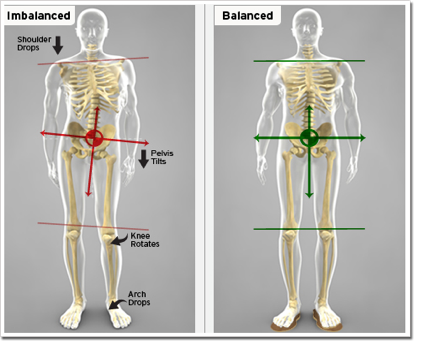
Many patients ask us about this topic and it is a very relevant topic pertaining to symptoms of low back pain and pain of the hip, knee, foot and ankle. Thanks to Georgia Clinic for sharing the original article: http://www.georgia-clinic.com/blog/2015/01/treatment-short-leg-syndrome-augusta-ga/
What is Limb Length Discrepancy or Short Leg Syndrome, and what problems does it cause?
Limb Length Discrepancy, also known as Short Leg Syndrome, occurs when one leg is shorter than the other, often causing problems in the knees, pelvis, back, and neck. This condition can be either permanent ('anatomical') or reversible ('functional'), both leading to increased stresses on the pelvis and lumbar spine, resulting in low back, buttock, hip, and leg pain. Even small differences can be significant. Functional short leg arises from pelvic rotation due to habits like sleeping on one side or carrying items unevenly, while anatomical short leg is due to structural differences from growth problems, malformed joints, or injuries. As experienced chiropractors, we provide customized treatments, including correcting pelvic alignment and using orthotics for anatomical differences, to restore mobility and reduce pain.
Many medical researchers have concluded that even a few millimeters of leg length inequality (a quarter of an inch or less) may be a primary or contributing cause for low back or hip problems, and an obvious stress factor in the legs.
‘Functional Short leg’
This is where both legs are structurally the same length, but there is still an apparent short leg. The leg length is commonly measured from a bony protuberance on the front of the pelvis (ASIS) to the top of the inside ankle bone (medial malleolus) and will be equal both sides.
Despite symmetrical measurements, a functional short leg is due to rotation of the pelvis on one or both sides of the sacroiliac joints. It can arise from repeatedly sleeping on one side, carrying items on one side, running clockwise on a track, using the phone on one side, lifting suitcases or carrying children on one side over a period of years.
This causes increased stresses on the muscles, nerves and joints involved, leading to an imbalance in the muscles on one side of your body. Runners are commonly affected by this and will notice they impact the pavement harder with one foot than the other, and will often wear down one heel faster than the other.
‘Anatomical Short leg’
This is where one leg is structurally shorter than the other. This can be due to growth problems, often when one leg grows too much/not enough, malformed hip joint sockets (hip dysplasia), problems with the femoral head (slipped or crumbling epiphysis), or a flat foot on one side. A clubfoot or incorrectly formed muscles and ligaments of the lower leg can also give rise to a leg length discrepancy although this is rare.
Other causes of a structural leg length difference can arise from fractures or infections of the long bones in the leg which interrupt normal growth. A difference in leg length will cause a change in the way you walk, placing uneven stresses on the pelvic joints making them more susceptible to irritation and injury. When standing, it can cause a tilt of the pelvis and, if severe enough, can alter the way you hold yourself causing a lateral curvature to your spine (scoliosis) as you try to compensate and stay straight and upright. This, in turn, can cause neck and upper back/shoulder problems.
Treatment for Short Leg Syndrome in Augusta GA
As experienced chiropractors in Augusta GA, we have successfully provided patients with treatments without the use of pharmaceutical drugs or invasive procedures. If a patient’s short leg syndrome is caused by a functional difference, we can provide customized treatments to address the underlying biomechanical cause and areas of imbalance.
If a patient’s short leg syndrome is caused by an anatomical difference, then we can correct the difference with special insoles (orthotics) to correct leg length as much as possible. If not corrected, it causes muscle tension, joint wear and tear, back and leg pain and other symptoms.
Before prescribing a heel-lift or orthotics, we will correct the pelvis to encourage the body to use its natural compensation abilities. The human frame achieves this through the pelvis, which, by distorting slightly, can change the level of the middle triangular bone of the pelvis, called the sacrum. Up to one inch can be compensated in this manner.
When leg length is corrected, we can then proceed with customized treatments, which will restore the mobility and alignment of the joints and the correct type of exercise will even out and strengthen the muscles around your joints, including the spine and the neck. Our customized treatments will address your spine and pelvis as your joints adjust to the corrections made by the orthotics.”
Also worth mentioning as a factor which can cause a “short leg” is myofascial (muscle and connective tissue) shortening and restriction. Imagine the ability of dozens of rubber band-like strands of muscle and fascia which have lost their normal, balanced tension, pulling more to one side than the other!
At Levin and Chellen Chiropractic we specialize not only in the mechanics of normalizing joint movement, but also in restoring normal soft tissue tension or mechanics. We do this by employing specific techniques like myofascial release therapy and neuromuscular therapy. See our website page titled “Chiropractic Services” for links to these techniques.
Disclaimer
Thank you for visiting the Levin and Chellen Chiropractic web page. Please note that the information located on our site is not intended to provide specific chiropractic advice. You should consult with a chiropractic doctor and not rely on any information contained herein regarding your specific condition. We welcome the receipt of electronic mail though not for making appointments, soliciting and sales, or inquiries which need immediate response. Please be advised, however, that the act of sending electronic mail to this office or to Dr. Sharon Levin, DC or Dr. Nels Chellen, DC does not alone create a physician-patient relationship. We will neither accept requests for chiropractic advice or treatment nor offer specific chiropractic advice over the internet. The information here is presented for general information purposes only and is not intended to be used as a substitute for medical advice.
Should anyone share his or her personal health information with us via internet, telephone, or in writing, we will respect their right to confidentiality and abide by federal guidelines set forth according to HIPAA (Health Insurance Portability and Accountability Act). Therefore we present to you our Notice of Privacy Practices. This document is available to you through a link on the Resources page of this web site.